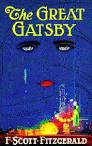
Your Saturday Book Review — The Great Gatsby

Although I haven’t read it in years, in honor of the newest movie version, today’s Saturday book review will be F. Scott Fitzgerald’s The Great Gatsby.

If you haven’t read it, must you?
YES.

If you read it only once a long time ago, should you read it again?
Probably.

Why not just see the movie?
Gatsby is not only a great book, it’s one of the most accessible “classics” ever written. It’s a short novel, practically a novella, not only in length but in the simplicity of its structure. The plot is straightforward, and the prose beautiful, polished and as smooth as one of those expensive shirts Daisy rolls around in from Gatsby’s closet. Gatsby’s Closet – now that would make a great name for a men’s shop, or a section in Barneys.

You could just see the movie, but you’d be missing a lot. This is a first person story told by a narrator, Nick, who is always just a bit removed from the action. There’s a difference between “seeing” through Nick’s eyes, where the truth emerges slowly, and seeing explicitly through a camera. Movies are a visual medium. Books are about the words, and Gatsby is filled with asides, descriptions and phrases that are gems, which won’t easily translate to visuals. (347 of them have been contributed to a list on Goodreads.) It would be like seeing a ballet of a Shakespeare work. It might be worthwhile, in and of itself, but it’s not the same.

The New York State English Language Arts Regents Exam, required for high school graduation, has an essay question where the student is asked to elaborate on a statement, using two works he or she has read. Back when I taught high school, in practice session, young men often chose Gatsby as one of the works. Most of the statements are general and often involve themes like loyalty, friendship, love or values, and Gatsby is about all of these, but mostly it’s a story about a man who loved a woman and remade his whole life to win her, and won her, and ultimately died for her and she wasn’t worth it. This seemed to resonate with young men, mostly poor, who have grown up in a world where people meet violent ends and the ability to have tons of stuff is valued above all else. They would write about the book with passion, and honesty. They weren’t parroting something they’d heard a teacher say. They got it.

It amazes me that there has been no modern day hip-hop version of the story, with cocaine or marijuana as the bootlegged substance Continue reading Your Saturday Book Review — The Great Gatsby

Dept of FFS — Somebody Whining in Salon about Self-Publishing

So this morning, I read yet another post in Salon written by mid-list author bitching and moaning that self-publishing is hard. Is this part of a series?

Had the post itself been funny or otherwise entertaining, it might have worked as an attention getting strategy for the book,  but instead it was long, boring, and full of self-pity, thus prompting a response on my part, which you could either search for in the comments, or read below:

I probably should consider my words here, but….

Me, me, me. Would you like some cheese with that whine?. Did someone twist your arm and force you to self-publish your novel? Did you do any actual research before you took the plunge? Work with your agent on coming up with a publicity strategy? What on earth made you think that doors would simply be open to you? Also, your friends are your friends. It would be nice if they would support you or help you out, but it’s not their job, and it gets awkward, especially when these are well-connected friends and it feels like they are being used. (Which isn’t to say that you can’t give a reading somewhere and make it sound like the best party EVER and invite people you know and love.)

Self-publishing is tough. It’s especially tough for people trying to pedal mid-list type, non-genre novels, mostly because readers who read those kinds of books like the idea of gatekeepers and are unlikely to find your book without reading a review in one of the places that doesn’t as a rule review self-published books, Continue reading Dept of FFS — Somebody Whining in Salon about Self-Publishing

The End of the World — On The Beach

Most post-apocalyptic movies explore how life goes on after it is all but destroyed. Perhaps we devolve, while the apes get smarter and take over. Could they do worse? Maybe the bonds between a boy and his dog will still be the greatest love of all? Or between a father and a son? We might be dining on each other or living in silos, but at least a few of us will be alive.

In these films, there’s always an after, even if it’s so bleak you’d rather not live to see it. On The Beach is different. The premise simple: A nuclear war started, possibly by accident, has led to worldwide radioactive fallout destroying life on the planet, except for Australia where the radioactive winds haven’t reached yet – but they’re coming in about five months or so and when they do – lights out for all. Meantime, life seems strangely normal. There are horse-drawn carts on the streets of Melbourne, but also cars, and the trains still run. Perhaps, humanity is in denial, or maybe this is a more likely scenario than the mayhem we see in most end-of-the-world is coming films. After all, most humans when given a terminal diagnosis go on pretty much as they were.

Lt. Peter Holmes (Anthony Perkins) of the Royal Australian Navy, still makes sure the bottle is warm when he feeds his infant daughter, and still follows orders. His wife, Mary, would rather not even speak about what’s to come, though in this she doesn’t seem different than most. Peter is assigned to be a liaison officer on a mission being carried out by a US submarine that was at sea when the blast hit. Under the command of Dwight Towers (Gregory Peck), the USS Sawfish will head north and check on air and water samples to see if just maybe the radiation might be Continue reading The End of the World — On The Beach

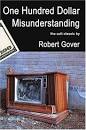
Your Saturday Book Review: Sentimental Education OR The 100 Dollar Misunderstanding

(Once again I find myself reading or not reading three different novels, and am forced to review something I read once upon a long time ago.)

The line between satire and bad taste may be non-existent, and once the work is no longer topical, in most cases, all that’s left is bad taste. This may be the problem with Robert Gover’s once daring novel, The One-Hundred Dollar Misunderstanding, which is part of a trilogy for those readers who won’t read anything unless it’s a series. It should be noted, however, that this novel can stand alone, if it stands at all.

Let me confess, I read it years ago, when it was in a list of recommended books for a college creative writing class. The reason it was on the list had to do with voice – not in the sense of the distinctive capital V writer’s voice, but rather the creation of characters with distinctive voices, telling stories from their points of view, and the concept that one could tell the same story from the entirely different points of view of two (or more characters).

The few of you who’ve actually read, Loisaida, may now be experiencing an “ah-hah” moment, as, clearly, this book had a definitive influence (for better or worse) on yours truly.

The setting is the early 1960’s, back when it was really still the 1950’s, before the JFK assassination, and The Beatles, and everything changed. The plot, or misunderstanding involves one James Cartwright Holland, Continue reading Your Saturday Book Review: Sentimental Education OR The 100 Dollar Misunderstanding

La Perichole, NYC-Opera — A First for Us Idiots

The New York City Opera production of La Perichole was a first for us in several ways: our first trip to City Center, our first New York City Opera Production, our first opera matinee experience, and our first experience with opera buffe.

Here is a brief history of the City Opera. You are welcome to skip this part if it’s already old news to you, click to get to the review of the production.

The New York City Opera began in 1943. The idea was to offer opera for the people with low-price tickets, a kind of post-New Deal project that still has New Deal written all over it, fitting for a city where at one time museums, botanical gardens and other cultural institutions were for anyone who had a nickel for the subway. It became a starting ground for many young singers including Placido Domingo and homegirl Beverly “Bubbles” Sills – who didn’t make it over to the Met till long after she was an established star.

The original home of the company was the New York City Center. This bizarrely ornate Moorish theater was originally known as the Mecca Temple and designed for the Shriners. After the depression when they couldn’t pay the taxes, the building stood empty and was slated for demolition before being reborn as The New York City Center for Music and Drama.

The company later moved to another “permanent” home at the New York State Theater at Lincoln Center (now named for someone we won’t name) across the courtyard from the Met, where it remained until leaving in 2011 because it could no longer afford the rent. City Opera has since survived by roving to different venues including the Brooklyn Academy of Music, and now it’s old home, the City Center.

Because our only opera experience has been at the Met, we couldn’t help make comparisons. When we got to the City Center, we were impressed with the bathrooms. We can report that both the men’s and women’s restrooms were cleaner and in better shape than at the Met, though long lines are still an issue for the ladies. The house is much smaller, with only three seating levels – orchestra, mezzanine, and balcony. Our seats were in row G of the balcony. The renovated rows offer more legroom, but the result is that the seventh row of the balcony is very distant from the first, and while the much smaller house puts you closer to the stage than you would be from the balcony at the Met, the site-lines are nowhere near as good. We were in the center, but at an angle above the stage where we could only see a part of the orchestra pit if we stood up, and the very front of the stage was cut off, especially on the left side which was problematic at times with the staging. Despite the steep levels, because we had to look down to see, peoples’ heads in rows in front of us, could sometimes block the view. The rails between rows are low, so if you have a fear of heights, the balcony is no place for you. There is no balcony lobby so nowhere to go during intermission, and if you need to use the bathroom, you have to walk through the rows of seats to get to it. Compared to equivalent seats at the Met – the full-freight price would be similar, but the view at the Met much more open, including the orchestra pit, and at a better angle, though further away.

As for the production itself, Continue reading La Perichole, NYC-Opera — A First for Us Idiots